CoLearn
Team: 4 Designers
Timeline: Jan 2025 - Jun 2025
Brief: This case study project was completed in collaboration with the Junior Designer program and the Educators Alliance, both at the UCSD Design Lab.
The Problem: Teachers feel isolated and students don’t feel like the system is meeting their needs. There’s mutual empathy: Despite their frustrations, students recognized that teachers face systemic constraints that limit how innovative or personalized their curriculum can be. But how did we get here?
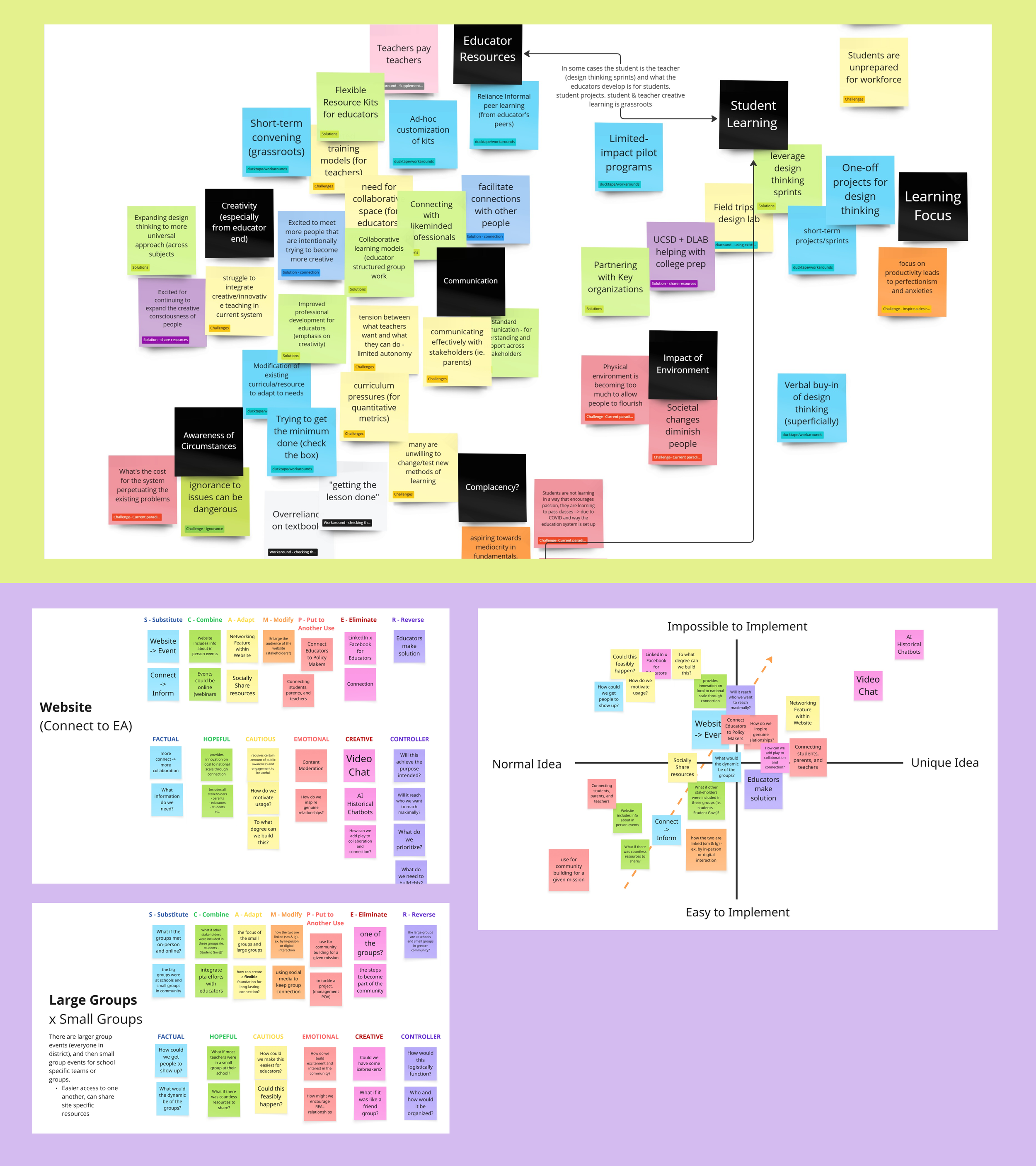
Our process was focused on listening. We conducted empathy mapping with educators and students, interviewed teachers, gathered insights from the CAYS Conference, and worked closely with the Educators Alliance. Curriculum reform is slow and deeply political, leaving a widening gap between what schools teach and what students need. Creativity is consistently undervalued, and neither teachers nor students have what they need to bridge that gap. Teachers want to be creative and support their students rather than teach to test, but they're held back by limited tools, time, and institutional support. Students, meanwhile, are craving hands-on, relevant learning experiences that give them real agency over their education and prepare them for the world beyond the classroom. Across all of our research, the message was clear: teachers don’t need more pressure. They need safe, trusted spaces to collaborate.
So, how might we innovate to build a connected and cohesive educator community that is comprised of supportive relationships that enhance learning and well-being in an environment that is increasingly unfamiliar, while also building trust amongst co-creators in the ecosystem?
Problem
Solution
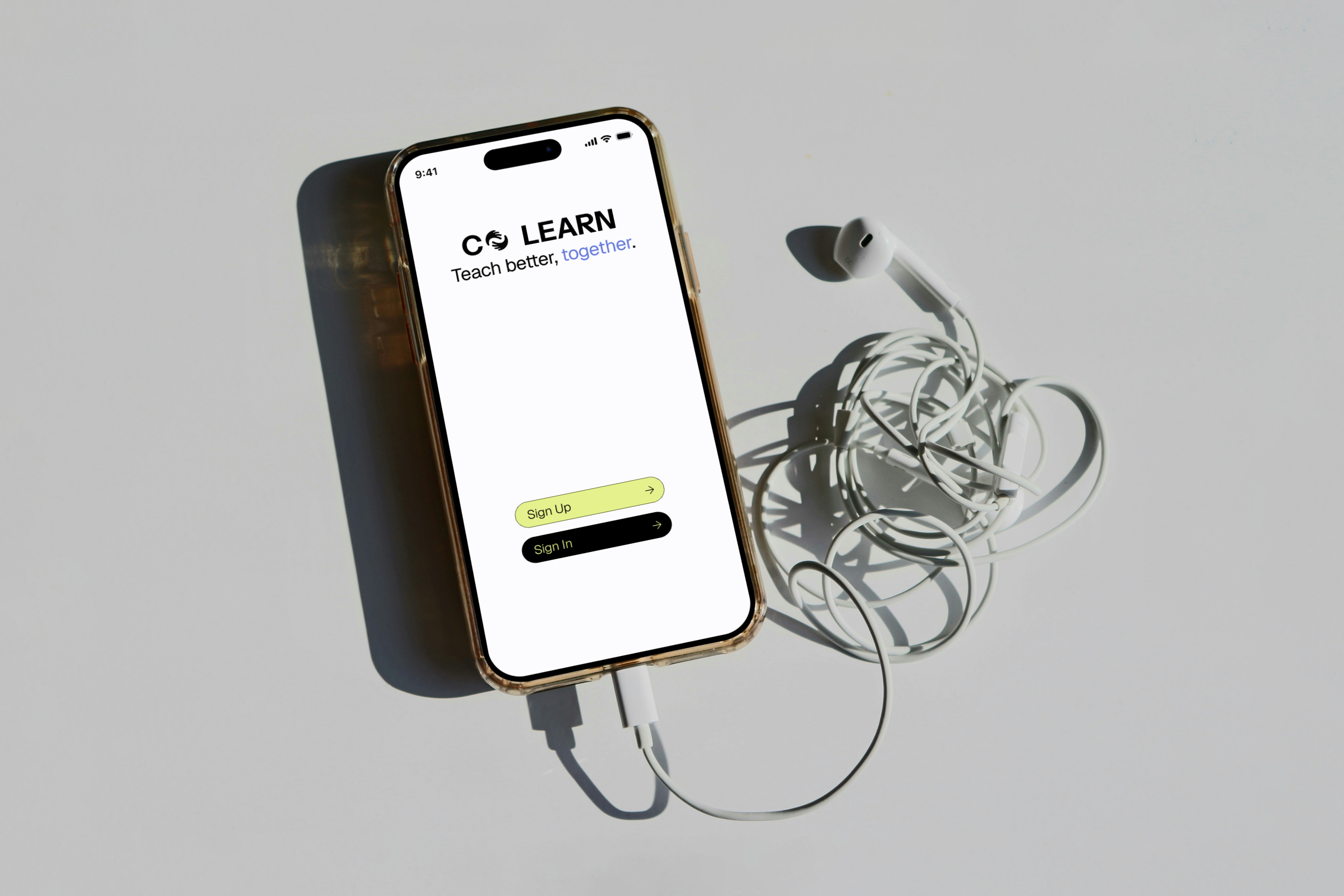
CoLearn is a platform for educators built to create relationships. Think social network meets classroom lab, with peer networks, shared resources, and reflection tools designed to support collaboration and teacher-driven change through shared experimentation, rather than top-down pressure.
Teachers start with a short onboarding survey (11 questions) about their role, interests, and challenges. CoLearn uses this information to match educators with aligned peers and create conversations that feel intentional. Once matched, educators can chat directly or participate in group discussions. The platform supports peer-to-peer conversations, feedback on ideas, and ongoing collaboration over time. Educators can also see local events hosted by the Educators Alliance. CoLearn puts teachers first, offering the tools, space, and community they need to create, connect, and lead change.
We tested our onboarding survey and early concept with educators. 6 out of 7 users felt CoLearn would help them discover new teaching ideas faster than their current methods. Some users wanted clearer distinctions between mentorship and peer relationships. Older educators were more hesitant, reinforcing the need for trust, clarity, and simplicity.
Visual Identity
CoLearn's visual design is intentionally understated. A warm, creative palette nods to the energy of education without feeling institutional, while clean typography and generous spacing keep the focus on content and connection rather than the interface itself. The logo emphasizes the collaboration aspect of the platform, signaling that CoLearn provides its users with a helping hand. Every visual decision was made in service of one goal: making educators feel at ease the moment they arrive.
🥡 Takeaways
Empathy isn't just part of the process, it's the heart of it. By truly listening to educators and letting their voices drive the direction, I learned how powerful it is to start with people rather than assumptions. CoLearn began as a response to a feeling we kept hearing: educators doing important work alone. That insight pushed me to think beyond features and consider how digital spaces can build trust, care, and momentum between people.